Demon's Magic Mirror
The Snow QueenThe Demon's Magic Mirror is an enchanted looking-glass made by Demon, whose power turns perception against goodness and beauty. Its destruction multiplies rather than removes its influence: scattered fragments continue to distort sight and chill the heart, shaping Kay's change from a loving child into a cruel critic.
Creation and Operation
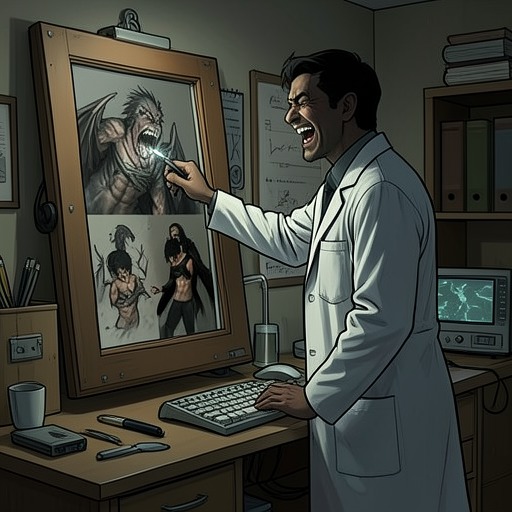
Demon makes the mirror while in a merry mood. Reflected in it, what is good or beautiful seems to shrink almost to nothing, while what is worthless or bad grows larger and more repellent. Lovely landscapes become like boiled spinach; people look hideous and distorted, as if standing on their heads without bodies. Faces become unrecognizable, and a single freckle can seem to spread across the nose and mouth. The mirror also misrepresents good or pious thoughts, turning inward goodness into something to ridicule. Demon laughs at the mischief of his invention.
The device does not simply make things look different: it systematically magnifies faults and diminishes whatever might counter them. That rule gives its distortions a moral force. A viewer looking through it can mistake selective, hostile perception for clear judgment, because even goodness is made to appear trivial or false.
Circulation and Shattering
Demon's pupils carry the mirror about, speaking of its wonders and claiming that people can at last see what the world and humankind are really like. The claim spreads with the object: it is carried everywhere until every land and people have been viewed through its distorted surface. Their confidence in the mirror's account contrasts with what the narrative has already shown about its operation; its promise of truth is the very means by which it conceals and reverses what is good.
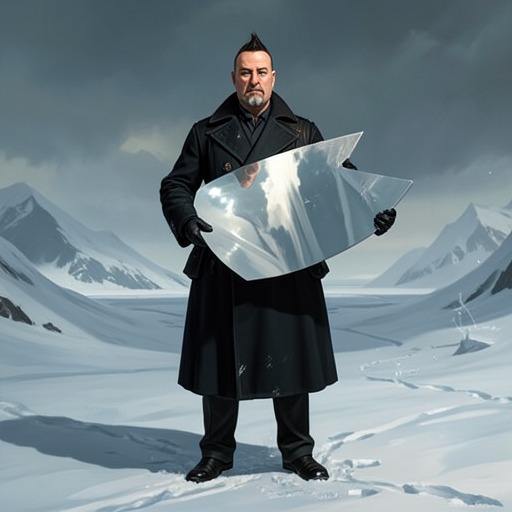
The pupils then try to fly with the mirror up to heaven to look at the Angels. The higher they rise, the more slippery the glass becomes. They can scarcely hold it, and it slips from their hands, falls to earth, and breaks into millions of pieces. The attempt to extend the mirror's vision heavenward thus produces the crisis that disperses its power most widely. After the fall, its danger is greater, not less: tiny fragments fly across the world, and some are no larger than grains of sand.
The Fragments' Effects
A fragment that enters a person's eye remains there unnoticed, but from then on the person sees through a distorted medium, or sees only the worst side of what is viewed. Even the smallest atom retains the power of the whole mirror. Larger pieces can become windowpanes, turning the view of friends into a distorted one, or spectacles through which nothing can be seen rightly or justly. The mirror's broken form therefore does not make its influence partial or harmless; each piece preserves the same bias that governed the original object.
A fragment in the heart has a different but related effect. The heart becomes cold like a lump of ice, making the damage more than a matter of mistaken sight. The account describes the fragments as a continuing, dispersed hazard: the mirror is no longer held in one hand, yet its material remains lodged in people and in ordinary objects used to see the world.
Kay and the Mirror's Legacy
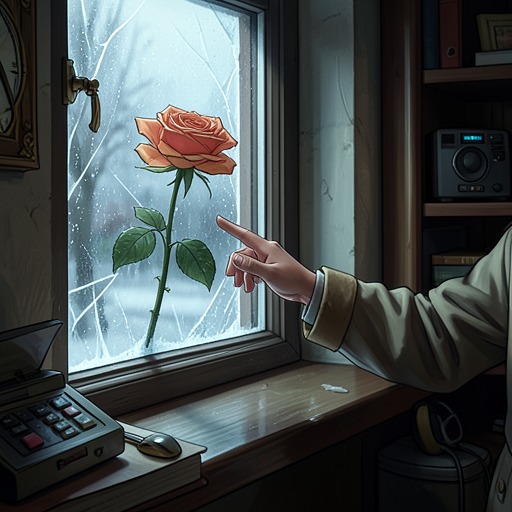
The mirror's power becomes personal when a piece enters Kay's eye and a small grain reaches his heart. Although Kay briefly thinks the eye fragment is gone, it remains; the grain in his heart quickly turns to ice. He feels no more pain, but his perception has changed. Looking at the roses, he notices supposed flaws, calls them ugly, kicks their boxes, and pulls them off. When Gerda is distressed, he tears off another rose and leaves by his window.
The same change reaches beyond the roses. Kay dismisses a picture book as fit only for babies, interrupts Grandmother's stories, and imitates her and people in the street, reproducing what is peculiar or disagreeable about them. Others mistake this conduct for remarkable cleverness, while the narrative identifies the fragments in his eye and heart as its cause. In Kay's case, the mirror's two effects work together: the eye makes faults dominate what he sees, and the icy heart strips away the tenderness that might have answered them. The scattered glass thus carries Demon's distortion from a fantastic object into everyday judgments and relationships.